Case → random itemOne outcome from a set of possibilities.Mechanics diagram, not an interface screenshot.
Mechanics and example
A case lists possible outcomes, not items that are all awarded together. Selection follows that case’s probabilities. Rarity, price and probability are different properties. The animation displays the result; a neighbouring item near the pointer does not mean a near-win.
Check in the interface
Contents · probabilities · opening cost
02 / DATDROP
Case opening battles — Case Battles
In a standard battle, the highest total item value wins. For example, totals of 85 and 40 mean the first participant wins. Other variants can change this rule.
See how it worksEducational example · predetermined outcome
Classic: compare the totals of both rounds.
Two cases · two participants
A
AK-47 | Aquamarine Revenge
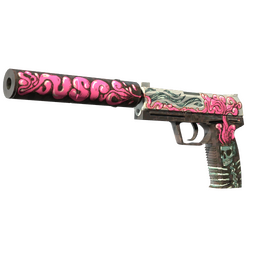
USP-S | Cortex
This round
0
Total
0
B
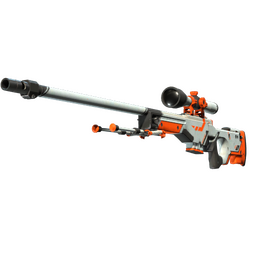
AWP | Asiimov
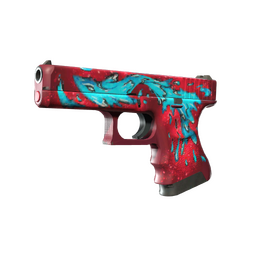
Glock-18 | Water Elemental
This round
0
Total
0
1 / 4
Classic: two participants open the same two cases.
Round one: A gets 80, B gets 10. A leads for now.
Round two: A gets 5, B gets 30. Add both rounds.
85 exceeds 40, so A wins Classic. Terminal would count only the last round: 5 versus 30, so B would win.
Results → comparisonClassic compares total results.Mechanics diagram, not an interface screenshot.
Mechanics and example
Opening and allocation are separate stages. Participants receive case results, then the selected rule determines the winner and allocation. An expensive individual drop therefore does not always win. In a team format the comparison concerns teams, not only individual participants.
Case Battle variants
Classic
Highest total drop value wins.
Crazy
The comparison is reversed: the lowest total wins.
Smoke
The rule is revealed at the end; interim standings cannot be read as Classic.
Terminal
The final round determines the result instead of the total. Additional modifiers can alter the rule.
Jackpot
A weighted random selection determines the winner; the largest share is not a guarantee.
Teams / Squads
Players form teams. In the official 5×3 example the winning team’s reward is shared equally.
Equality
All regular battle drops are shared equally among all participants, regardless of their individual drop values. Unavailable in sponsored battles.
Illustrative numbers, not a prediction.
A has results of 80 and 5; B has 10 and 30. Classic compares 85 with 40: A is higher. Terminal without extra modifiers compares the last round, 5 with 30: B is higher. The rule matters as much as the numbers shown.
Check in the interface
Lobby · cases · rounds · rules
03 / DATDROP
Elimination tournament — Battle Royale
Unlike an ordinary battle, this has stages and elimination. Tournament rules determine who advances and how rewards are distributed.
See how it worksEducational example · predetermined outcome
Four participants
Semifinals
ABCD
Final
AD
Winner
D
1 / 4
All or Nothing example: four participants, two stages.
A beats B and D beats C in the first stage. A and D advance.
The final compares the new results of A and D. D has the higher result here.
D wins the tournament and receives all regular drops. Safe Mode distributes them differently.
Rounds → finalAn elimination tournament bracket.Mechanics diagram, not an interface screenshot.
Mechanics and example
This is an elimination bracket with successive rounds, rather than one long ordinary battle. DatDrop describes Safe Mode with a reward on elimination and All or Nothing with a combined prize for the final winner. Safe does not mean the initial expense is preserved: a reward can be worth less. The bracket determines the number of rounds.
Check in the interface
Participants · rounds · winning conditions
04 / DATDROP
Rock, paper, scissors — RPS
There are three slots: rock, paper and scissors. The RPS rule determines the result, rather than a comparison of total drop values.
See how it worksEducational example · predetermined outcome
Rock · paper · scissors
RockPaperScissors
1 / 4
Three slots: rock, paper and scissors. Selected cases open for each.
Figures move automatically. On collision, rock turns scissors into rock.
Paper now meets the rocks and turns them into paper.
Only paper remains. Its owner receives the regular drops. Total drop value does not decide the winner.
Figures → winnerThree participants with a separate winning rule.Mechanics diagram, not an interface screenshot.
Mechanics and example
RPS is a three-participant format based on rock, paper and scissors figures. Unlike Classic, it is not a comparison of total drop values. DatDrop describes the winning figure as determining who receives the openings of three case sets. The ×3 refers to openings, not guaranteed profit or skin value. Tie resolution is governed by the particular game rules.
Check in the interface
Choices · round rules · result screen
05 / DATDROP
Skin upgrading — Skin Upgrade
There is an input value, a target item and a success chance. Success awards the target; failure does not, and the input value is spent.
See how it worksEducational example · predetermined outcome
Example chance: 25%
USP-S | Cortex
25%
AWP | Asiimov
1 / 3
Input item on the left, target on the right. This illustrative example shows a 25% chance.
The coloured quarter represents success. The remaining 75% represents failure.
In this fixed example the marker stops outside the coloured zone. The target is not awarded, the input is spent and the platform awards a consolation prize.
Input value → probabilityThe target result is not guaranteed. Illustrative example: 10%.Mechanics diagram, not an interface screenshot.
Mechanics and example
Upgrade is a probabilistic attempt to turn an input value into a target result. Three values matter: the input consumed, the target and the displayed success probability. Failure does not award the target. A per-attempt probability is not a promise of success after a fixed number of repetitions.
Check in the interface
Input · target item · displayed probability
Format history and probabilities
DatDrop and the history of the format
DatDrop describes itself as the first platform to bring PvP to case opening. This is the company’s claim, not proof that it invented the entire skin industry or rock, paper, scissors itself. Its development of the format concerns competitive case results, team variants and tournament structures.
Probability explained
A hypothetical 10% chance does not guarantee one success in ten attempts. With independent attempts, the chance of at least one success in ten is 1 − 0.9¹⁰ ≈ 65.1%; no successes remains about 34.9%. A previous failure does not itself improve the next chance.
An individual opening produces your own random item. A Case Battle compares participants’ openings under the selected lobby rules.
Are Battle Royale and Case Battles the same?+
They are separate formats. Battle Royale has a round-based structure; inspect advancement and result rules in its interface.
Does Upgrade guarantee a more valuable skin?+
No. Upgrade has a displayed probability of success; the target item is not guaranteed.
What does Provably Fair verify?+
It concerns the calculation of random results. It does not guarantee profit or replace payment and withdrawal conditions.
Can simulator skins be withdrawn?+
No. Simulator items and balance are virtual and cannot be withdrawn.
Are these modes inside CS2?+
No. These are third-party platform mechanics themed around CS2 skins, not Counter-Strike matches. They do not change weapon performance.
Why did the most expensive drop not win?+
Classic uses totals, Terminal uses the final round, Crazy reverses the comparison, and Jackpot uses random selection. Team results also matter in team formats.
Can the next skin be predicted?+
Past drops and animations do not reliably predict it. Provably Fair verifies the calculation of a result, rather than revealing a future one.
Are all items equally likely?+
Not necessarily. The contents list and probability table serve different purposes. The number of pictures does not determine item probability.
Why does a skin price differ from Steam?+
A platform valuation and a marketplace price are different measures. Fees, supply and valuation time can differ. Drop value is not automatically resale proceeds.
Does Safe Mode prevent losses?+
No. Receiving a reward and recovering expenses are different. The name describes tournament allocation.
Can mechanics be studied without a real deposit?+
Simulator Mode uses separate virtual items and balance. Its results do not transfer to a real inventory.
Does the simulator support bots or a friend?+
PvP simulators support bots and other participants. A game link is used for a shared session; everyone must have Simulator Mode active. Details and limits follow below.
Does Simulator Mode stay active forever?+
No. Sessions have a selected duration. The platform returns to normal mode when it ends; distinguish virtual from real balance.
Does any mode guarantee profit?+
No. A winner, verifiable randomness or a reward does not mean its value exceeds expenses.
Additional reference: simulator
The simulator uses a separate virtual balance. It helps explain the interface; it does not establish future real-money results. Expand the instructions for multiplayer, bots and session limits.
Simulator instructions and limits
SIM
DATDROP / SIMULATOR
Play with bots or real people — using a virtual balance
DatDrop’s free PvP simulators support bots and other players. Create a game and share its link to play together. Every participant must have Simulator Mode active.
How to start
Sign in to DatDrop and open the Simulator page.
Choose a virtual budget and session duration. Select Enable, read the simulator rules and confirm activation.
Choose Case Battles, Battle Royale or RPS. Create a game and share the game link with the people you want to play with; everyone must activate Simulator Mode.
Use bots in supported PvP simulator games when you want to explore the format without gathering other players.
Which formats support multiplayer?
Case Battles: 2–15 players. Battle Royale: 4–72 players. RPS: 3 players. Case opening and skin upgrades are solo formats. These are the participant ranges displayed on DatDrop’s simulator page; available lobby options depend on the selected format.
Virtual balance, session and limits
The simulator has a separate virtual balance and inventory. You can explore the games without spending real money; simulated balance and skins cannot be withdrawn.
Deposits and cashouts are unavailable in Simulator Mode. Free Cases, King Cases, Royale Race and partner payouts are also unavailable.
DatDrop states that game odds are the same as in real mode. Simulation results do not predict future outcomes.
When the selected session expires, Simulator Mode ends automatically and DatDrop returns to standard mode with your real balance. Check the active mode before playing. You can end a session early by selecting Disable on the Simulator page.